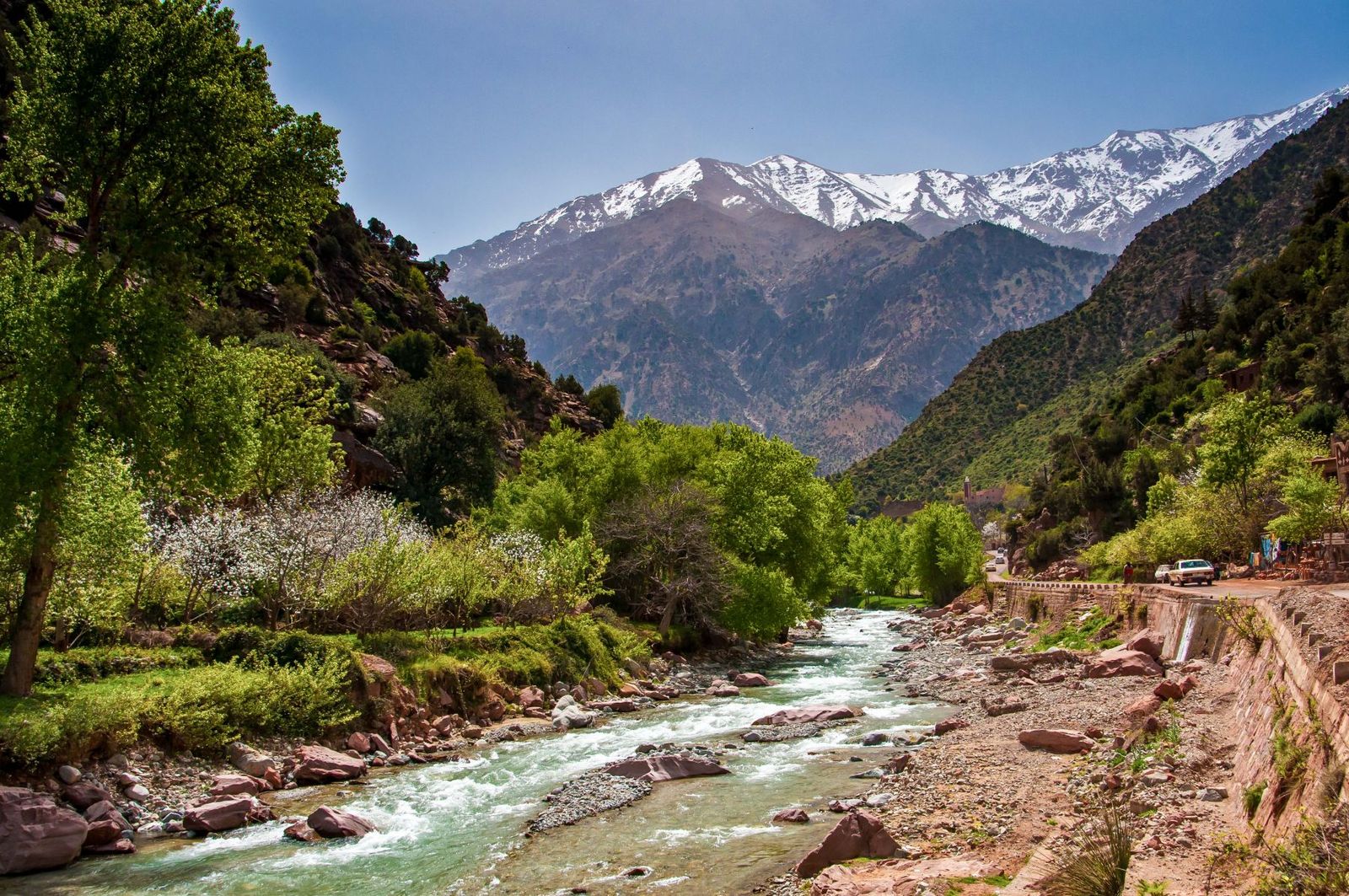
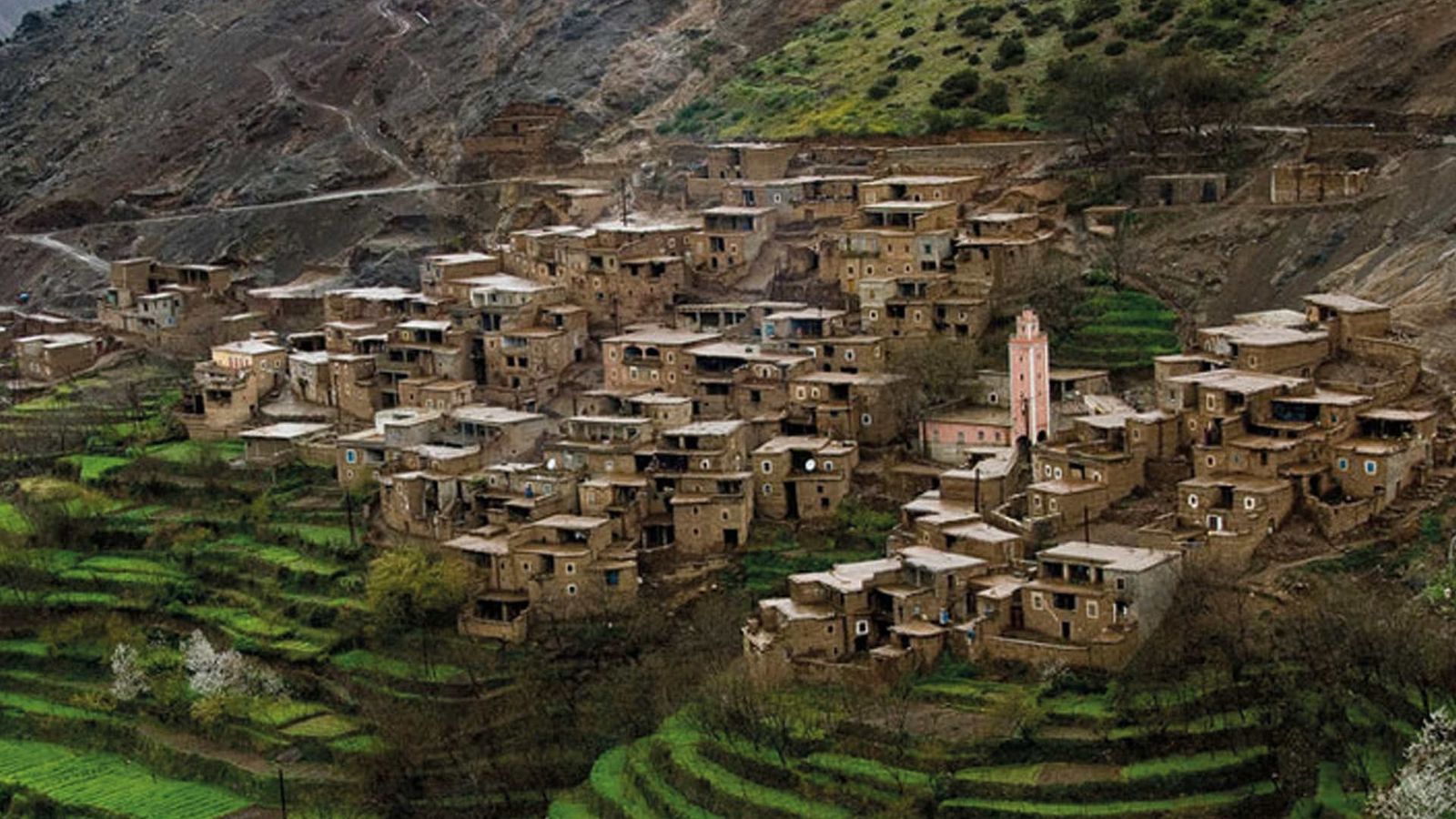
Ourika Valley

- Often described as Morocco's first ecomuseum, opened in 2009
- Restored pisé tower called Talberj by villagers
- Jewellery, pottery, textiles and historic photographs
- Reported closed since the 2023 earthquake: ask us before planning
Short answers
Is the Berber Ecomuseum in the Ourika Valley open?
No: the Ecomusée Berbère de l'Ourika has been reported closed since it was damaged in the September 2023 earthquake, and no reopening had been announced as of September 2026. Its website still lists daily opening but has not been updated for years, so ask us before planning a visit; we check locally and suggest other stops nearby.
Where is the Berber Ecomuseum and how far is it from Marrakech?
The Berber Ecomuseum is in the village of Tafza, near Tnine Ourika, about 37 km from Marrakech. Tafza is a short detour off the main Ourika road, and the last part is on foot through the village lanes. When the museum is open, allow about one hour for the visit, a little more if old documentary films are screened.
What can you see inside the Ecomusée Berbère de l'Ourika?
The Ecomusée Berbère de l'Ourika shows Amazigh jewellery, pottery, textiles and historic photographs of High Atlas life inside a restored pisé house that villagers call Talberj, the tower. Opened in April 2009 by Hamid Mergani and Patrick Manac'h, it is often described as Morocco's first ecomuseum, with objects displayed as they were used in a house.
What can I visit near Tnine Ourika while the ecomuseum is closed?
While the Tafza ecomuseum stays closed, the Nectarome aromatic garden, the roadside potters and a women's cooperative, all near Tnine Ourika, cover the same themes of valley life. If the museum reopens, a stop at Tafza adds little driving to an Ourika day trip and fits best in the morning, before the walk to the waterfalls.
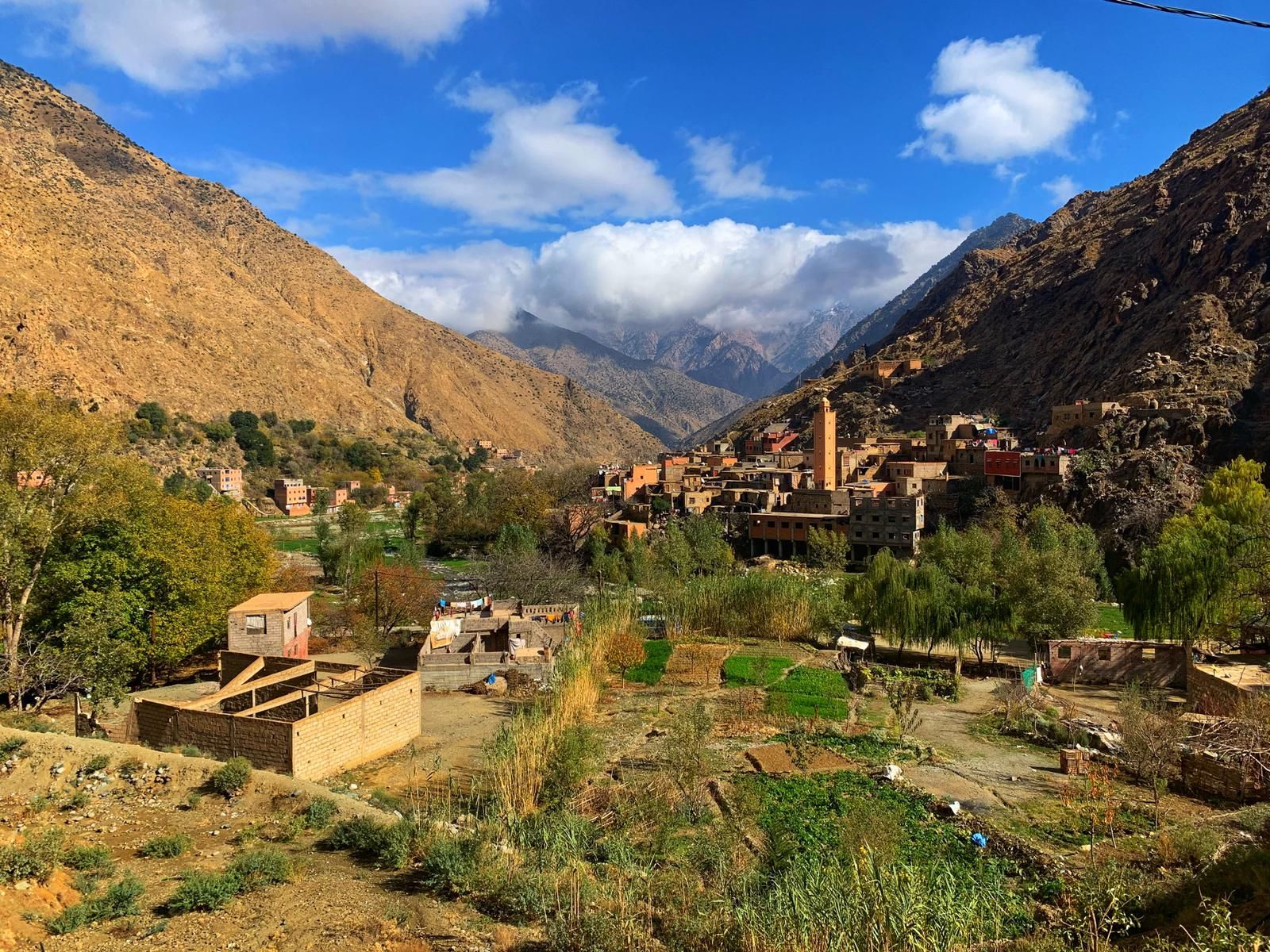
Most people drive straight past Tafza on the way to the waterfalls. That is a pity, because this small village near Tnine Ourika holds the best introduction we know to how families in the valley lived before tarmac, electricity and mobile phones reached the High Atlas. The museum has been reported closed since the September 2023 earthquake, so for now this page is background: what the museum holds, and what to see nearby while it stays shut.
What is the Ecomusée Berbère de l'Ourika?
The Ecomusée Berbère de l'Ourika opened in April 2009 on the initiative of Hamid Mergani and Patrick Manac'h, who also built its collection. It is usually described as the first ecomuseum in Morocco. The idea behind the word "ecomuseum" matters: rather than taking objects away to a city, the museum keeps them in the village they come from, and works with the people of Tafza on visits, workshops and walks.
It is a private cultural project, not a state museum, so it feels more like being welcomed into a well-kept house than walking through a gallery.
The building: Talberj, the tower
The museum occupies a tall earth house on the village square that the people of Tafza call Talberj, "the tower". It is about a century old and was restored with traditional techniques and materials, mainly pisé (rammed earth) walls, wooden beams and reed ceilings. Walking through it is a lesson in its own right: thick walls that keep rooms cool in summer and warm in winter, small windows, steep stairs, and a roof terrace with a view over the fields and the red slopes around Tafza.
Look at the door frames and woodwork. Carved and painted symbols were not decoration only: many were protective signs meant to guard the household. Your guide at the museum can explain the ones you see.
What you see inside
The collection is built around the daily world of Amazigh (Berber) families of the High Atlas, and especially the world of women:
- Jewellery. Silver diadems, earrings, fibulae (the pins that hold a draped garment), bracelets, anklets and amulets. Much of it was part of a bride's dowry and was a family's savings as much as an ornament.
- Pottery. The largest part of the collection, including cooking vessels similar to the tagine pots still made in the valley today. If you are interested, our page on the potters of Ourika explains what to look for when buying one.
- Textiles and carpets. Veils, woven blankets and rugs with symbolic patterns. After seeing them here, a visit to a rug workshop in the valley makes much more sense.
- Photographs. Historic images of High Atlas life, including work by the photographer Jean Besancenot, which show villages, clothing and ceremonies as they were in the first half of the twentieth century.
- Films. The museum has screened old documentary footage of mountain life from the 1940s and 1950s, including a colour film by Daniel Chicault. Ask whether a screening is running when you visit.
The objects are shown in rooms arranged as they would have been used: a kitchen corner, a storage room, a living space. It is easy to picture the house full of people.
Why it will be worth an hour when it reopens
Later in the day you will pass women carrying fodder, earth houses on the slopes and tiny terraced plots watered by seguias. The ecomuseum gives you the keys to read that landscape. We find that guests who stop here ask better questions for the rest of the trip, at the women's argan cooperative, at the potteries and at lunch. If you want to go further into the subject, our guide to the people and culture of the valley and the history of the Ourika Valley pick up where the museum leaves off.
Is the Ecomusée Berbère open at the moment?
Current status. The museum has been reported closed since it was damaged in the September 2023 earthquake, and no reopening had been announced when we last checked. Its own website still lists daily opening, but it has not been updated in years, so we do not quote hours or ticket prices. Ask us before planning a visit. The tips below apply once it reopens.
Getting in. Tafza is a short detour off the main Ourika road near Tnine Ourika. The last part is on foot through the village lanes, so wear shoes you can walk in and be ready for a few uneven steps.
Inside. Stairs between floors are steep and narrow, and ceilings can be low. Visitors with limited mobility may only manage the ground floor; tell us in advance and we will ask what is possible.
Respect. Tafza is a living village, not a museum set. Greet people you pass (a simple "salam" is enough), ask before taking photos of anyone, and dress modestly, with shoulders and knees covered.
Buying. The museum works with local artisans, and it may be possible to arrange a visit to a pottery workshop in the village. Buy directly from the maker when you can; our page on cooperatives and villages explains how to buy fairly.
What can you visit instead while it is closed?
The themes of the museum are easy to find elsewhere near Tnine Ourika. The Nectarome aromatic garden is a few minutes away, the roadside potters of the valley work in the open, and a women's argan cooperative shows the kind of household know-how the museum's rooms describe. Our Ourika Valley day trip already includes a cooperative, and with a private car with driver you choose your own stops. If the museum reopens, we will add Tafza back to our routes and update this page.
Good to know before you go
The 2023 Al Haouz earthquake affected many villages in the province, and the museum's building was among those reported damaged. The Ourika road and the valley are open to visitors, and eating, buying and hiring guides locally is the most direct way to support the villages while places like the ecomuseum wait to reopen.
Frequently asked questions
Is the Ecomusée Berbère open?
It has been reported closed since it was damaged in the September 2023 earthquake, and we know of no reopening date as of September 2026. The museum's own website still lists daily opening, but it has not been updated for years. Ask us before planning a visit: we check locally and suggest other stops if it is still closed.
How long does the visit take?
When the museum is open, most visitors spend about an hour inside, a little more if you watch the old documentary films that are sometimes screened. Add a few minutes to walk from the road through the village lanes to the tower. It makes an easy morning stop before continuing up the valley to Setti Fatma.
Is it suitable for children?
Yes, as long as children can manage steep, narrow stairs between the floors. The rooms are small and the objects are displayed as they would have been used in a house, which many children find more interesting than glass cases. Keep hands off the textiles and jewellery.
Can I take photos inside?
Ask at the entrance. Photography rules can change, and some items and photographs belong to private collections. Outside, in Tafza itself, please ask before photographing people, especially women and children, as you would anywhere in the valley.
Can I visit the ecomuseum on your Ourika day trip?
Not while it is closed. Instead we suggest the Nectarome aromatic garden, the roadside potters or a women's cooperative, all near Tnine Ourika. If the museum reopens, a stop at Tafza adds little driving and we will gladly plan it in the morning, before the walk to the waterfalls.